Call for Applications: Islamic Economics and Finance Research Fellowship Program, 2026 Fall
Call for Applications
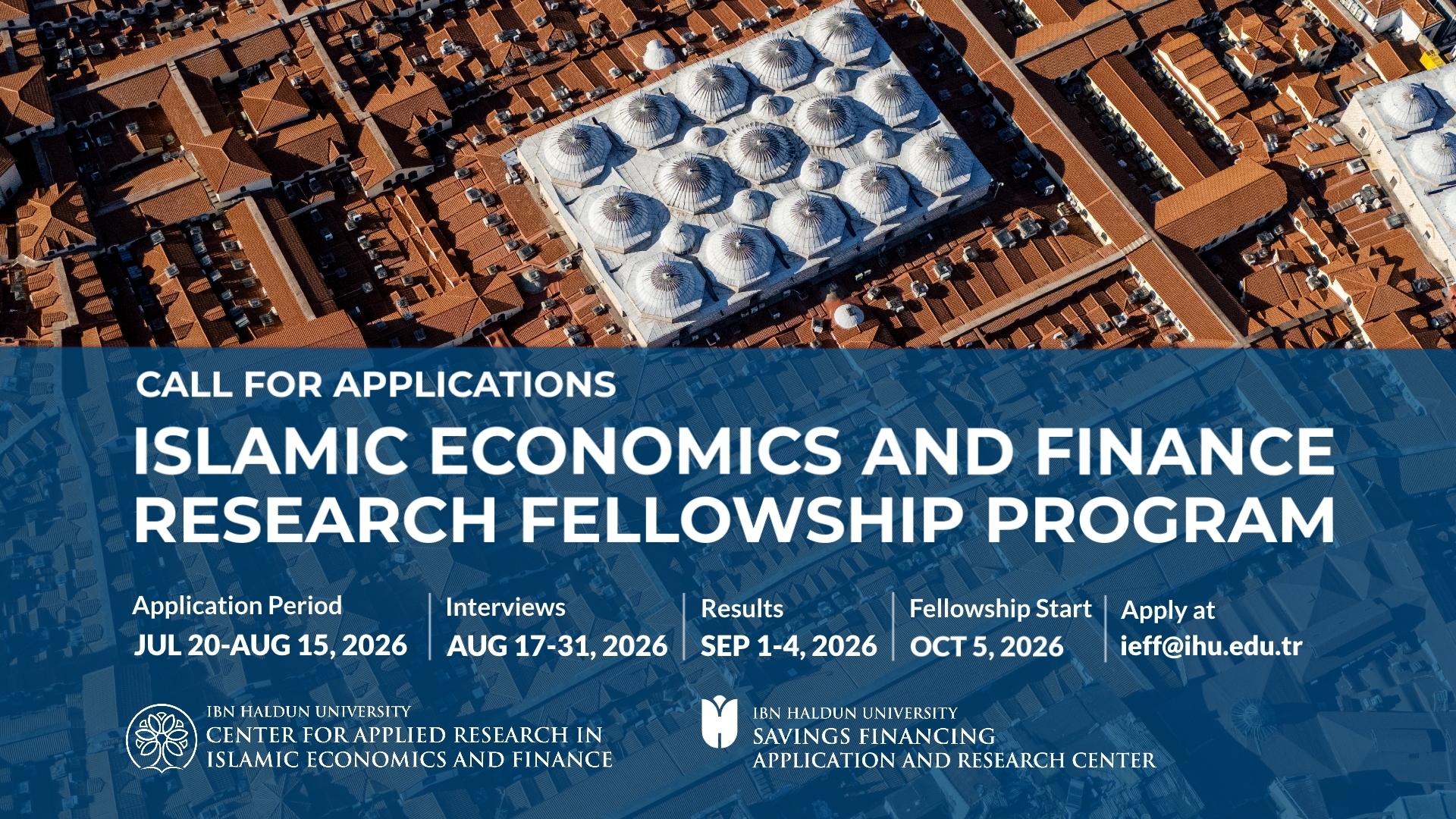
The Ibn Haldun University Center for Applied Research in Islamic Economics and Finance and the Savings Financing Application and Research Center are accepting applications for the fall 2026 cycle of the Islamic Economics and Finance Research Fellowship Program.
The program aims to support promising graduate researchers at Ibn Haldun University, strengthen their research capabilities, and enable them to contribute to academic, sectoral, and policy-oriented research in Islamic economics, Islamic finance, participation finance, savings finance, and related interdisciplinary fields.
Designed in line with Ibn Haldun University’s principles of intellectual independence, original knowledge production, internationalization, and contribution to society, the program extends beyond the provision of financial support by offering fellows academic supervision, structured progress reviews, researcher-development training, and opportunities to participate in the research activities of the centers.
The program also seeks to strengthen the relationship between academic research, public policy, financial institutions, sectoral stakeholders, and civil society.
Program Structure
The program is expected to support up to four fellows across two principal research tracks:
- Islamic Economics and Finance
- Savings Finance
Each fellowship will initially be awarded for six months. Following a satisfactory interim review, the fellowship may be extended for an additional six months.
The following considerations will inform the renewal assessment:
- Progress under the approved research work plan
- Academic quality of interim outputs
- Timely submission of progress reports
- Assessment of the academic supervisor
- Participation in required program activities
- Availability of financial resources
- Completion of the required institutional approvals
Renewal is not automatic and does not constitute an acquired right.
The centers are not required to fill all announced positions. The number of fellows selected will be determined in light of the quality of the applications, the research priorities of the centers, available financial resources, and the completion of the necessary institutional approvals.
The program may periodically open new application cycles. Renewal of an existing fellowship and admission of new fellows through a new call are separate processes.
Fellowship Support
Selected fellows are expected to receive the following forms of support:
- A monthly research stipend equal to the monthly cash living allowance of IHU’s BAB1 scholarship* for the relevant academic year
- Additional dormitory support aligned with the amount and implementation principles determined by the University for campus dormitory support in the relevant academic year
- Academic supervision by an IHU faculty member working in a relevant field
- Training in research methods, academic writing, data analysis, publication processes, research ethics, and researcher development
- Regular progress reviews and academic feedback
- Participation in seminars, workshops, research meetings, and projects organized by the centers
- Opportunities to engage with academic, public-sector, industry, and civil-society stakeholders
- Support in developing the research into an article manuscript, working paper, policy brief, sector report, conference paper, or new research project
(*) The reference to the BAB1 scholarship concerns only the amount used to determine the monthly research stipend. Admission to the program does not confer BAB1 scholarship status or any other rights associated with that scholarship category.
Research Tracks
1. Islamic Economics and Finance
Research under this track may be theoretical, empirical, comparative, legal, institutional, or policy-oriented.
Indicative research topics include:
- The theoretical and methodological foundations of Islamic economics
- Islamic moral economy and contemporary economic thought
- Islamic finance, participation banking, and participation finance
- Islamic capital markets and corporate finance
- Financial institutions, trust, governance, and regulation
- Financial stability, risk, resilience, and sustainability
- Waqf, zakat, qard hasan, and social impact
- Islamic commercial and contractual law
- Islamic financial regulation
- Institutional development and public policy in Islamic economics and finance
- Comparative studies of Islamic and conventional financial institutions
- Data-driven and applied research on the participation finance ecosystem
2. Savings Finance
Research under this track may address the following subjects:
- Savings finance institutions and alternative financing models
- Household saving and financing behavior
- Housing and other forms of asset-acquisition finance
- Financial inclusion, accessibility, and consumer welfare
- Institutional trust and governance
- Consumer protection
- Legal and regulatory developments
- Sectoral data, performance, resilience, sustainability, and impact analysis
- International comparisons and examples of good practice
- Relationships among savings finance, household finance, and financial-sector development
The centers may identify more specific research topics within these areas or assign topics to fellows in accordance with their strategic priorities, ongoing projects, stakeholder relationships, and available data.
Eligibility Requirements
Applicants must:
- Be enrolled in a thesis-based MA or PhD program at Ibn Haldun University, or complete final registration in an eligible IHU program by the fellowship start date
- Demonstrate an interest in one of the program’s research tracks
- Possess sufficient academic, methodological, and language proficiency to conduct structured research
- Be available to participate regularly in academic supervision meetings, progress reviews, training activities, and relevant center activities
- Be capable of completing the expected research outputs within the fellowship period
- Disclose their existing scholarships, project support, paid assignments, employment status, and other financial support
Applications are not limited to students of economics and finance. Interdisciplinary applications from Islamic studies, law, sociology, political science, management, history, psychology, data analysis, and other relevant disciplines will also be considered.
Meeting the eligibility requirements does not in itself create an entitlement to admission to the program or financial support.
Application Documents
Applicants must submit the following documents in English:
1. Curriculum Vitae
An up-to-date academic CV including education, research interests, publications, conference participation, project experience, language proficiency, technical skills, and relevant professional experience.
2. Academic Transcript
A current graduate transcript.
Newly admitted students who do not yet have an IHU graduate transcript may submit their admission letter together with their most recent academic transcript.
3. Statement of Purpose
A brief statement addressing:
- Why the applicant wishes to join the program
- How the program relates to the applicant’s academic development
- The research track in which the applicant is most interested
- The contribution the applicant expects to make to the research community of the centers
Recommended length: 300-500 words.
4. Short Research Proposal
The applicant should select one of the priority research themes, if available, or any of the sample themes stated in the call and explain:
- The research question they would formulate
- The academic or institutional importance of the question
- How they would begin investigating the question
- The data, documents, literature, or other sources that could be used
- The research method or methods that might be appropriate
- The type of output that could realistically be produced within six months
Recommended length: 500-750 words.
The short research proposal is intended to assess the applicant’s ability to define a research problem, identify appropriate methods and sources, and design a feasible study. The topic addressed at the application stage will not necessarily become the fellow’s final research project. The final topic may be revised or reassigned in accordance with the research priorities of the relevant center.
5. Academic Work Sample
A sample demonstrating the applicant’s academic writing and research abilities.
Applicants may submit one of the following:
- A course paper
- A thesis chapter
- A research proposal
- A working paper
- A published or unpublished article
- A policy report
- Another comparable academic work
Where the original document is lengthy, the applicant may submit a relevant section or an abridged sample.
6. Academic Reference
The following details of an IHU faculty member who can comment on the applicant’s academic potential and suitability for the program:
- Full name
- Academic title
- Institutional email address
A separate reference letter is not required at the initial application stage. A reference letter may be requested where deemed necessary.
7. Availability and Financial-Support Declaration
A brief declaration specifying:
- The amount of time the applicant can regularly allocate to the fellowship
- Current employment or paid assignments
- Scholarships currently received
- Project-based payments or research assistantships
- Any other relevant financial support
Application Procedure
All application documents must be sent in a single email to:
Email subject:
IEF Research Fellowship Application - Full Name - Research Track
Research Track: "Islamic Economics and Finance" or "Savings Finance"
Incomplete applications and applications submitted after the deadline will not be considered.
Evaluation and Selection
Applications will be evaluated through the following stages:
- Administrative eligibility review
- Academic assessment of the application documents
- Shortlisting
- Interview
- Evaluation and candidate recommendation by the relevant centers
- Completion of the required institutional and financial approvals
The following criteria will be considered:
- Academic and research potential
- Quality, clarity, and feasibility of the short research proposal
- Ability to formulate a feasible research question
- Methodological awareness
- Academic writing ability
- Alignment with the research priorities of the relevant center
- Potential academic, sectoral, social, or policy-oriented contribution
- Motivation and sense of responsibility
- Capacity to fulfill the program requirements
- Availability during the fellowship period
- Relevant language, data-analysis, legal, sectoral, or interdisciplinary skills
The evaluation committee may recommend changes to the research topic, scope, methodology, academic supervisor, timetable, or expected outputs.
Principal and reserve candidates may be identified.
Submission of an application, fulfillment of the eligibility requirements, shortlisting, or participation in an interview does not create an entitlement to admission to the program or financial support.
Final selection is subject to evaluation by the relevant center bodies and completion of all required institutional and financial approvals.
Academic Supervision and Research Work Plan
Each fellow will be assigned an academic supervisor from among IHU faculty members working in a relevant field.
Within the first month of the fellowship, the fellow and the academic supervisor will prepare a formal research work plan.
The research work plan will include:
- Final research title
- Research problem and questions
- Purpose and expected contribution of the study
- Relevant literature
- Research methodology
- Data or source strategy
- Research timetable
- Milestones and performance indicators
- Main and supplementary outputs
- Supervision and reporting schedule
- Ethical requirements
- Required institutional and data-access permissions
The final research topic may differ from the topic addressed in the short research proposal submitted at the application stage.
Substantial changes to the approved research topic, methodology, timetable, or expected outputs will be subject to the recommendation of the academic supervisor and the approval of the relevant center.
Monitoring and Interim Review
Fellows will be expected to:
- Meet their academic supervisors at the intervals specified in the research work plan
- Submit a written progress report at least once every three months
- Participate in evaluation meetings where required
- Respond to academic feedback and revision requests
- Participate in required researcher-development activities
- Report significant problems, delays, or changes in a timely manner
The interim review will take place in the fifth or sixth month.
The following considerations will inform the interim review:
- Progress under the research work plan
- Quality and timely submission of progress reports
- Academic quality of interim outputs
- Feasibility of completing the study
- Assessment of the academic supervisor
- Participation in training and center activities
- Maintenance of active student status and the required level of academic achievement
- Research priorities of the center
- Availability of financial resources
Following the interim review, the fellowship may be:
- Extended for an additional six months
- Extended subject to specified academic conditions
- Concluded at the end of the initial six-month period
Expected Research Outputs
Each fellow must produce at least one substantive main research output appropriate to the subject and duration of the fellowship.
The main output may include:
- An academic article manuscript
- A substantial working paper
- A policy research report
- A sector research report
- A comparative institutional study
- A legal or regulatory study
- An analytical report supported by a structured dataset
- An institutional mapping study
- Another equivalent research output approved by the relevant center
Fellows whose fellowships are extended for a second six-month period may additionally be required to produce at least one of the following supplementary outputs:
- A policy brief
- A research note
- A conference abstract or paper
- An internal research seminar
- A contribution to a center report
- A workshop or roundtable presentation
- A methodological note
- A structured bibliography
- A research dataset or supporting material
The final work must demonstrate concrete and verifiable progress toward academic publication, conference presentation, policy use, sectoral application, or institutional use.
At the end of the fellowship, the fellow must submit the final research output, a final report, and any other documents specified in the fellowship protocol and undertaking.
Fellows who successfully complete the program may receive a certificate of completion. They may also be included in the IHU Islamic economics and finance researcher network for consideration in future projects, publications, workshops, and research collaborations.
Academic Integrity and Other Support
All work conducted under the program must comply with the University’s regulations concerning:
- Academic integrity
- Research and publication ethics
- Protection of personal data
- Confidentiality
- Data security
- Intellectual property
- Responsible use of research tools and technologies
Applicants and fellows are required to fully disclose their scholarships, project payments, research assistantships, paid work, employment status, and other financial support.
Compatibility with other forms of support will be assessed in accordance with the IHU Graduate Scholarship Directive, the conditions governing the relevant source of funding, and the decisions of the competent University bodies.
Duplicate payment for the same cost or financial support item is not permitted.
Application Timeline
Application Period: July 20-August 15, 2026
Interviews: August 17-31, 2026
Announcement of Results: September 1-4, 2026
Fellowship Start: October 5, 2026
Application Deadline: August 15, 2026, 23:59 (Istanbul time)
Applications and Inquiries
Email: [email protected]
The centers reserve the right to revise the number of fellows, research topics, academic supervisors, and implementation details in accordance with institutional priorities, available financial resources, or relevant University decisions. Any material changes affecting applicants will be announced through the relevant institutional communication channels.
Related Content
Ibn Haldun University to Host the 14th Islamic Economics and Finance Summit

Applied Venture Capital (VC) and Private Equity (PE) Finance Program
Call for Part-Time Student Positions at CIEF and TASFIN
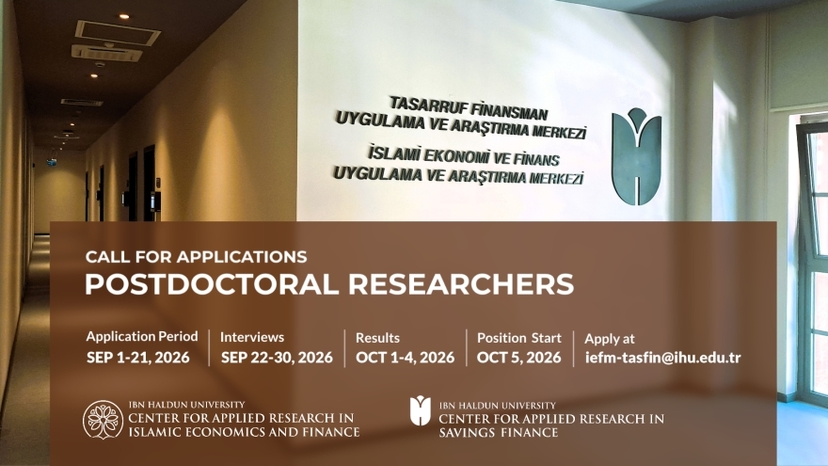
Call for Postdoctoral Researchers at CIEF and TASFIN
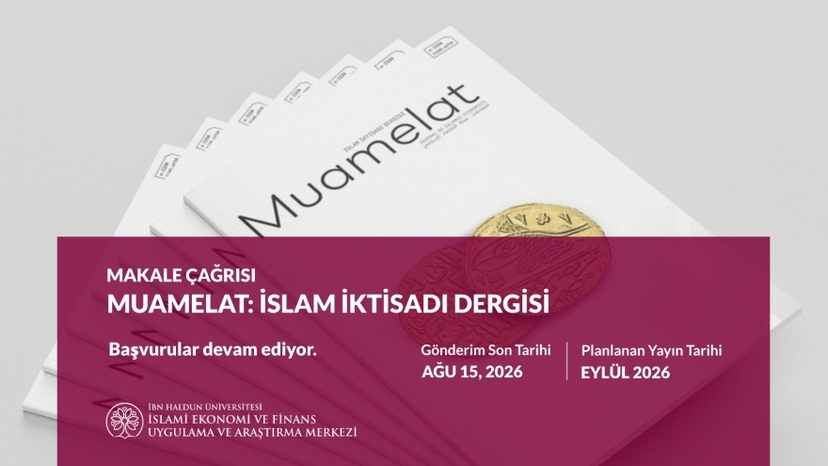
Call for Papers for the Third Issue of Muamelat
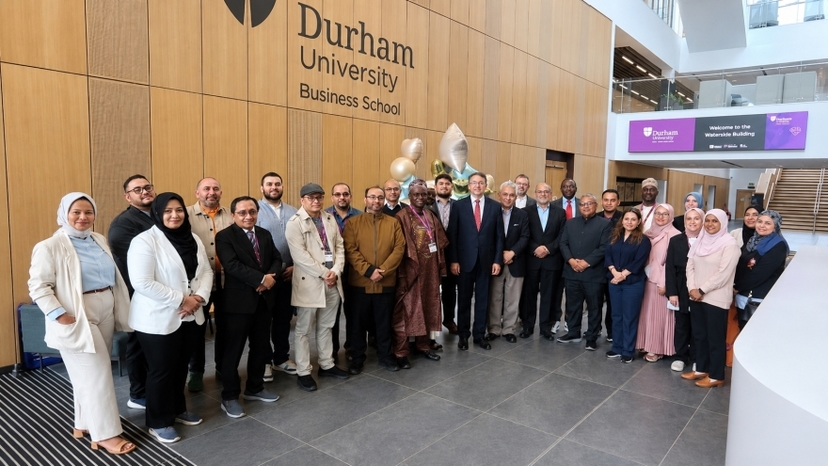
Call for Applications: SC-Durham Islamic Capital Market Summer School 2026

Türkiye-Malaysia Islamic Capital Markets Forum to Be Held at IHU
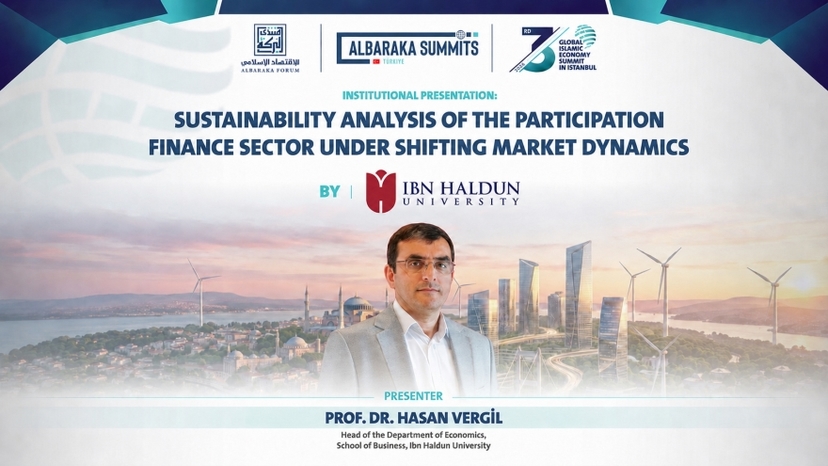
Prof. Hasan Vergil to Deliver an Institutional Presentation at the 3rd Global Islamic Economy Summit Istanbul