Prominent Islamic Finance Expert Farrukh Raza Joined IEF 514 at IHU

Prominent Islamic finance expert Farrukh Raza joined students in IEF 514 Islamic Corporate Governance. Drawing on his extensive industry and standard-setting experience, he connected corporate governance theory with contemporary Islamic finance practice.
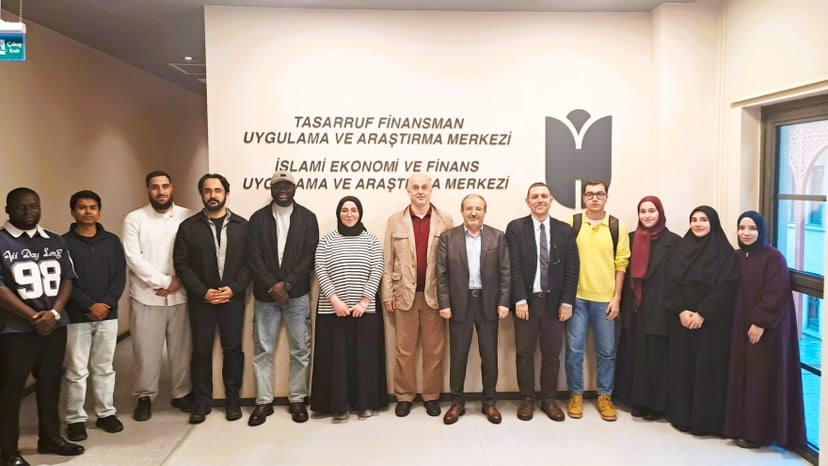
Students in Ibn Haldun University's thesis-based MA in Islamic Economics and Finance met with Mohammad Farrukh Raza, a prominent and internationally recognized figure in Islamic finance, on October 7, 2026, as part of IEF 514 Islamic Corporate Governance.
Raza contributes to the program as a visiting lecturer and serves as Chairman of Islamic Finance Advisory & Assurance Services (IFAAS) and Chairman of the Governance and Ethics Board of the Accounting and Auditing Organization for Islamic Financial Institutions (AAOIFI). With extensive international experience in advisory work, policy development, and standard setting, he has worked with governments, central banks, regulatory authorities, and financial institutions across multiple jurisdictions. This background offers IEF 514 students a distinctive opportunity to examine corporate governance not only through academic theory, but also through the contemporary institutional and governance challenges of the international Islamic finance industry.
The first part of the session examined why corporate governance matters and how governance is structured within modern corporations. The discussion addressed the purposes for which corporations are managed, power and accountability structures, decision-making processes, the role of boards of directors, organizational arrangements, compliance and audit functions, and internal controls. Corporate governance was presented not merely as a procedural system of oversight, but as a framework closely connected with trust, transparency, accountability, business integrity, financial stability, and long-term institutional sustainability.
A major theme of the session was the distinction between shareholder and stakeholder theories. Students considered whether corporations are responsible primarily to their owners or to a broader group of stakeholders, including employees, customers, suppliers, creditors, regulators, and society. This provided a basis for discussing how different stakeholder rights and interests can be balanced and how effective governance systems can address conflicts of interest.
The discussion then moved from general corporate governance to the distinctive governance requirements of Islamic financial institutions. Alongside conventional governance mechanisms such as boards, internal audit, delegation of authority, external audit, regulation, and standard-setting bodies, particular attention was given to Shariah controls as an additional layer of governance and oversight. Students were therefore able to consider the multi-layered accountability structure of Islamic financial institutions, which extends beyond financial and organizational performance to include compliance with Shariah principles and ethical responsibilities.
Drawing on his international advisory, regulatory, and standard-setting experience, Raza connected the conceptual framework of the course with governance challenges encountered by financial institutions in practice. Issues such as managing conflicts of interest, separating management and oversight functions, defining institutional responsibilities, and establishing effective control mechanisms were discussed not only as theoretical concepts but as practical questions faced by organizations in their day-to-day operations.
This practice-oriented perspective directly supports one of the central objectives of IEF 514: building a meaningful bridge between academic theory and professional practice. Examining corporate governance models alongside the experience of a practitioner actively engaged in the international Islamic finance industry enables students to see how theoretical principles operate within real institutions, where tensions can arise, and how sound governance principles can be translated into organizational practice.
Throughout IEF 514 Islamic Corporate Governance, students are expected to engage with both the theoretical foundations of corporate governance and their practical implications for Islamic financial institutions, including boards, stakeholder relationships, conflicts of interest, accountability, internal and external controls, Shariah governance, and ethical governance. Contributions from visiting lecturers such as Farrukh Raza, whose work combines extensive industry exposure with international standard-setting responsibilities, help students develop a stronger connection between academic knowledge and contemporary professional practice in Islamic finance.
Related Content
Malaysian MAIWP Delegation Visited Ibn Haldun University
Ibn Haldun University Represented at the 3rd Islamic Finance Forum in Baku

Dr. Fatih Al of CIEF Presented Research on Faith and Moral Agency at IHU
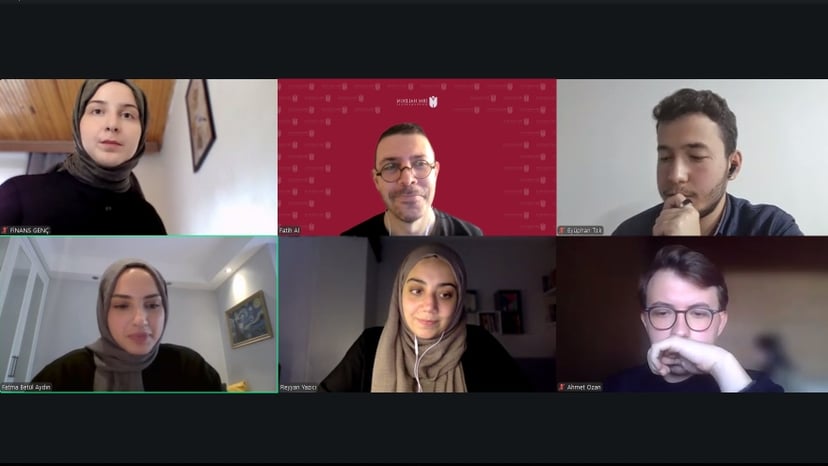
CIEF Provided Academic Support to the FinansGenç Capital Markets Workshop

Professor Mehmet Asutay of Durham University Explored the Foundations of Islamic Economics with IEF Students

The Third Issue of Muamelat: Journal of Islamic Economics Has Been Published
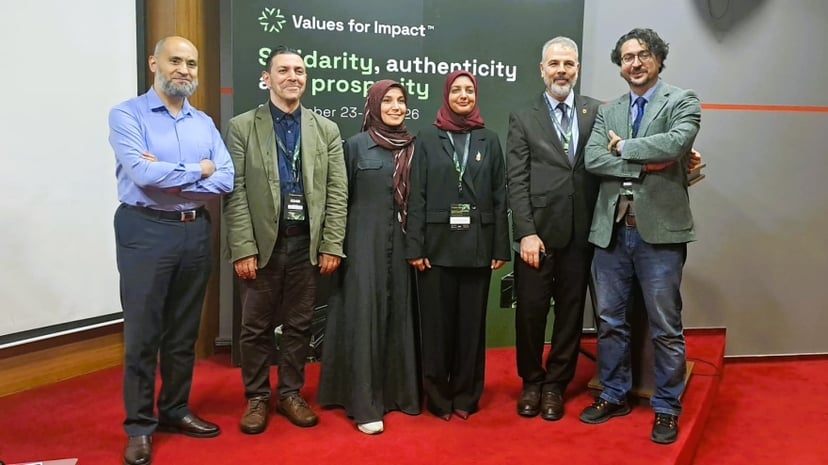
IHU Contributed to Values for Impact 2026 as a Strategic Partner
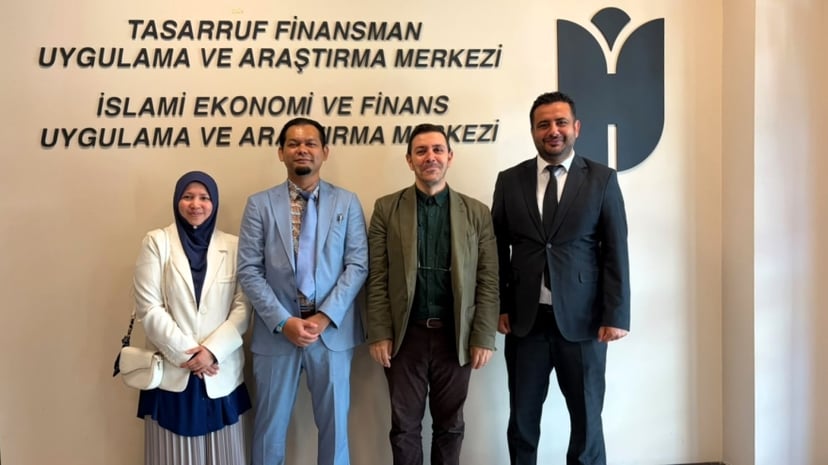
CIEF Hosted a Delegation from Universiti Sultan Zainal Abidin