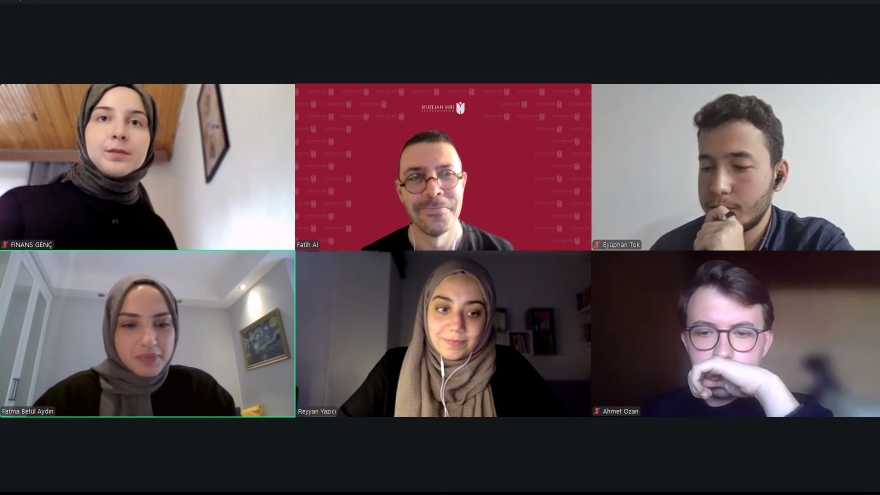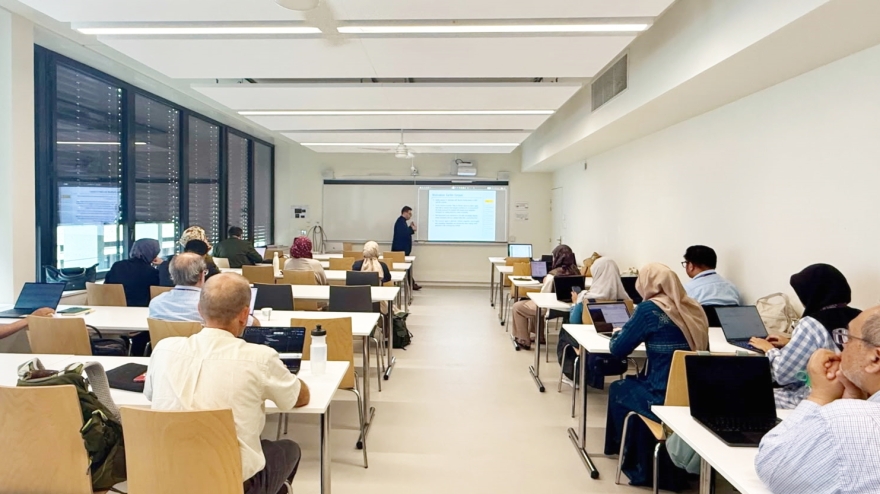
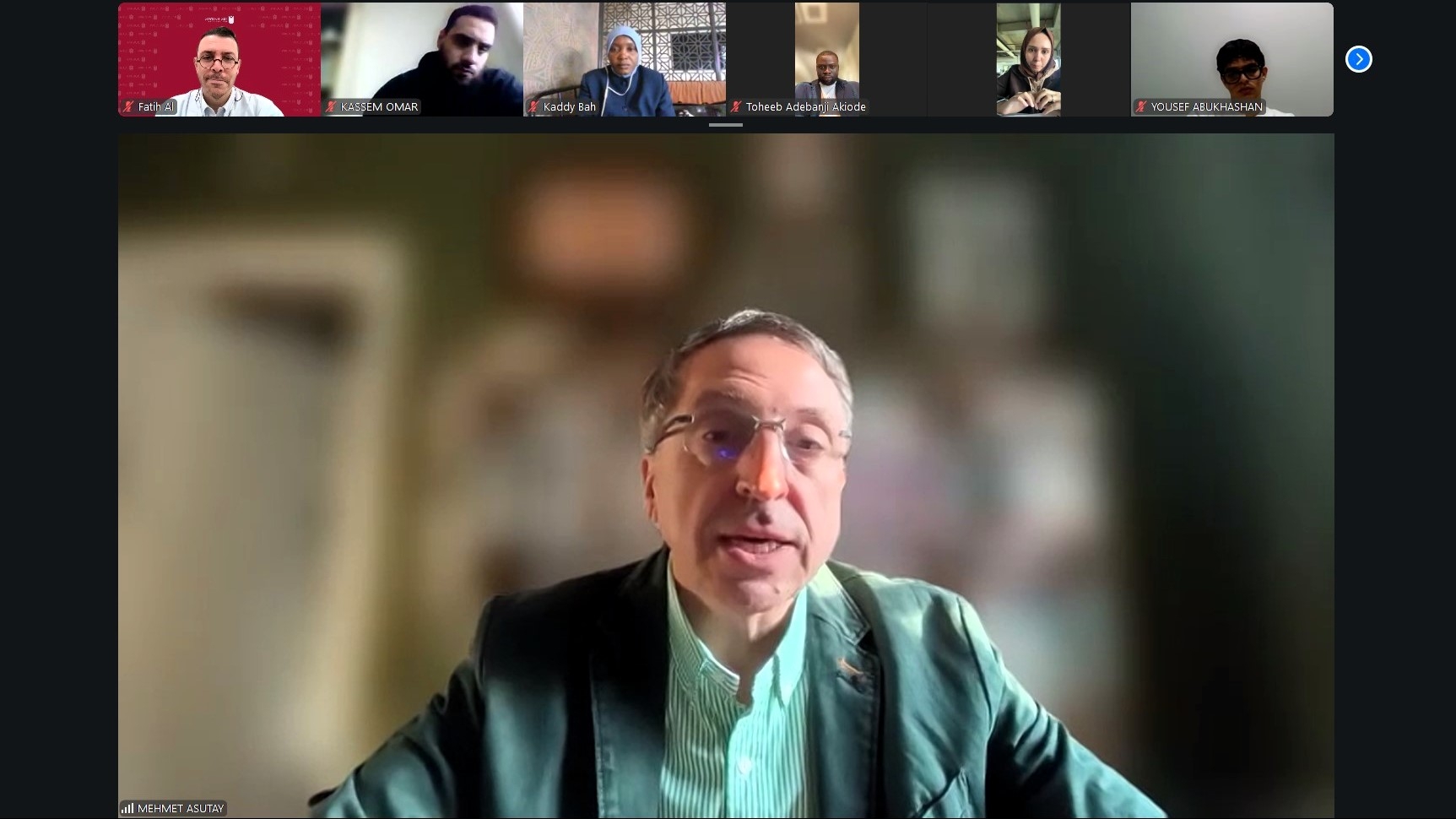
Students in Ibn Haldun University's thesis-based MA in Islamic Economics and Finance met with Professor Mehmet Asutay of Durham University Business School on October 1, 2026, for the first online session of IEF 505.
Professor Asutay, who contributes to the IHU program as a visiting professor, is Professor of Middle Eastern and Islamic Political Economy & Finance at Durham University Business School and Director of the Durham Centre for Islamic Economics and Finance. In 2024, he was awarded first place in the Knowledge Contribution category of the Islamic Development Bank (IsDB) Prize for Impactful Achievement in Islamic Economics in recognition of his significant work on Islamic moral economy and his contribution to articulating Islamic finance in support of sustainable development and human welfare.
Rather than beginning with financial products, contractual structures, and technical applications, Professor Asutay used the first lecture to introduce the broader intellectual and normative foundations within which Islamic finance can be situated. Drawing on the concepts of Islamic moral economy and Islamic political economy, he emphasized the importance of developing a coherent benchmark framework against which contemporary Islamic financial practices can be critically assessed.
A central theme of the lecture was the distinction between "Shariah-compliant finance", which largely seeks to ensure Shariah compliance while operating within the institutional framework of the existing financial system, and an "Islam-based finance" approach grounded in its own normative, conceptual, and institutional foundations. Professor Asutay argued that learning how instruments such as mudaraba and musharaka function is not, on its own, sufficient to understand the distinctive paradigm of Islamic economics and finance. A benchmark model is first needed to provide the conceptual grounding necessary for evaluating actual practice.
Against this background, the lecture addressed fundamental questions concerning the role of markets within Islamic political economy, the relationship between utility and falah, profit maximization, efficiency, equity, and the broader social purposes of economic activity. Professor Asutay presented Islamic economics not merely as a technical field concerned with moving capital through Islamic financial arrangements, but as an integrated system encompassing behavioral norms, institutional structures, development, and the relationship between economy and society.
Another major theme was the growing financialization of contemporary economies and the changing relationship between finance and the real economy. Professor Asutay critically examined the financialization tendencies of the broader economic system in which Islamic finance currently operates and emphasized the need for a more real-economy-oriented paradigm in which finance serves human and social well-being rather than becoming an end in itself.
The discussion also drew on Karl Polanyi's concept of "embeddedness" to examine the historical relationship between economic activity, society, and moral norms. Professor Asutay emphasized that economic relationships cannot be understood in isolation from the wider normative and social order in which they are embedded. In this context, he situated the emergence of modern Islamic economics from the mid-twentieth century onward within a broader search for an alternative economic framework that does not reduce human beings, labor, the environment, and capital to their roles within market relations alone.
The session began with introductions from students representing a diverse range of national, academic, and professional backgrounds and continued through questions and active discussion. The first lecture thus provided a broad intellectual framework for approaching Islamic economics and finance not simply as a field of technical financial arrangements, but as an area of inquiry that invites sustained reflection on the relationship between economy, morality, development, and society.